
Optimization & scaling of human brain organoid culture
via large-scale automation
Cellexpress.ai
As the impact of organoids continues to grow, so does the demand for scale, standardization, and affordability. Since our inception, we have worked to address these challenges, and it has become increasingly clear that large-scale automation is a key part of the answer.
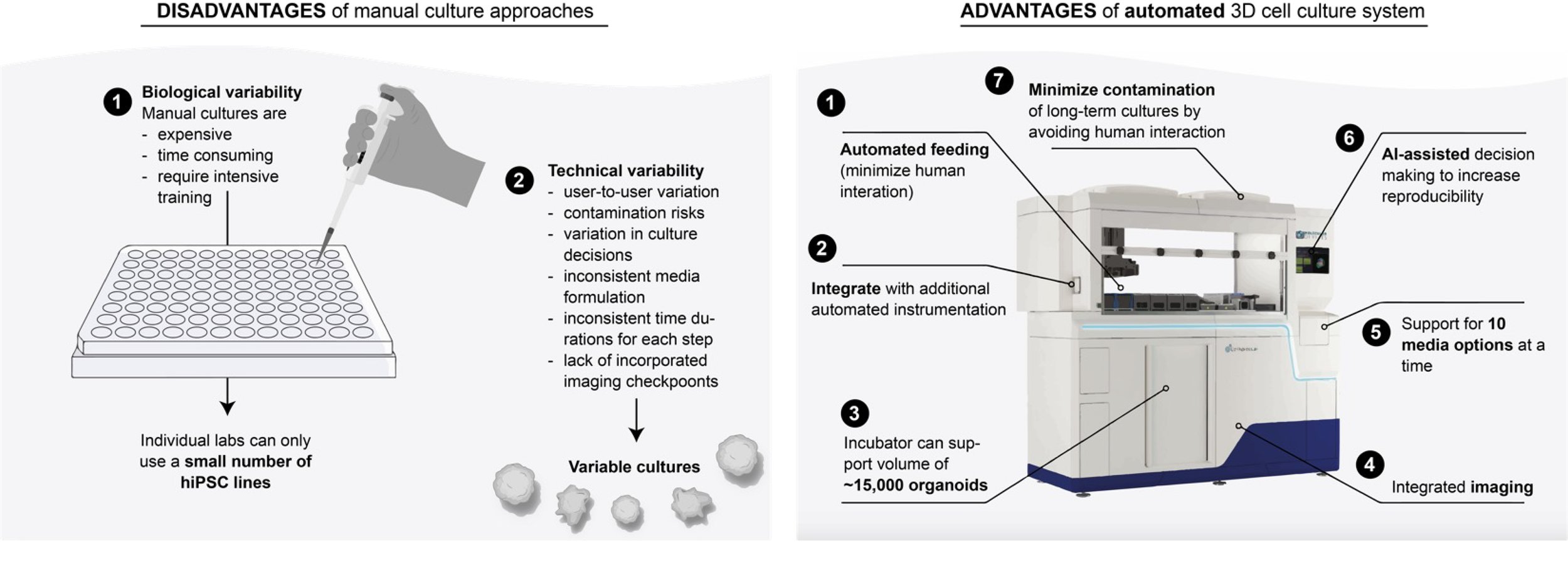
The hub now houses CellXpress.AI, which is a powerful, all-in-one automated stem cell and organoid cell culture system from Molecular Devices. Under the hood of its 7-foot enclosure is an integrated platform containing an 8-channel liquid handler, a confocal high-content imager, and a CO2 temperature-controlled incubator. Together, these components allow the machine to perform a wide range of functions, such as
maintaining and generating 2D and 3D cultures at scale (a capacity of up to 15,000 organoids),
automated monitoring of cultures through phase and fluorescent imaging and
deploying AI-based QC pipelines
With this platform, the hub is now able to automate up to 85-90% of its workflows from hiPSC culturing, passaging, organoid formation and maintenance. Read more about how the hub is impleneting Cellexpress.ai here.
Our early tests have shown that the organoids generated by Cellexpress.ai are highly uniform (left image below) and display improved regional specification with reduced cross-replicate variability (right image below).
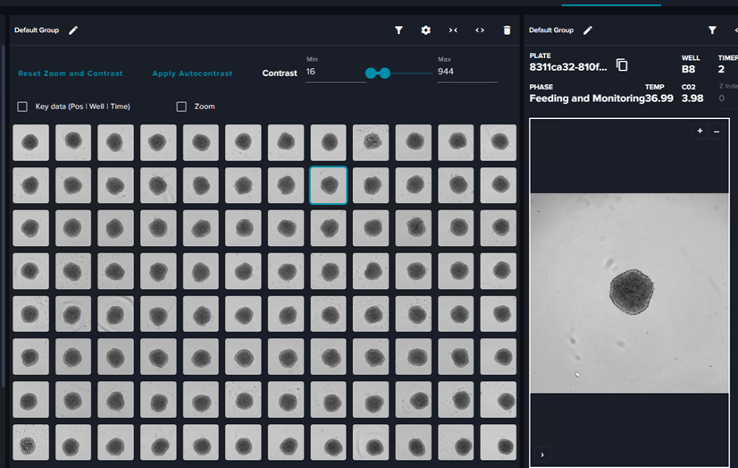
Monitoring of human cortical organoids (hCO) grown in Cellexpress.ai
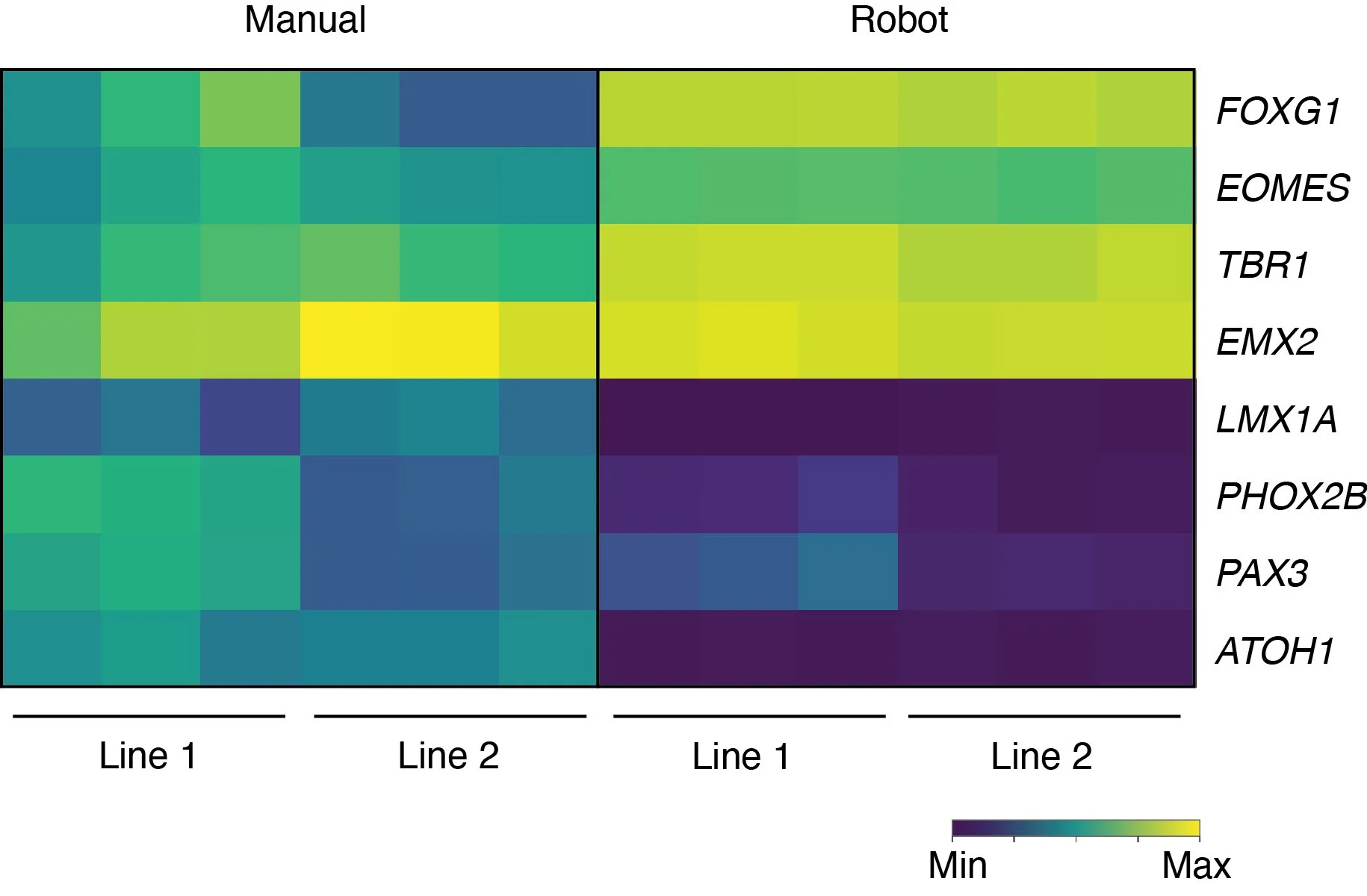
Expression of cortical marker genes in hCO grown either manually or by Cellexpress.ai.
Also, in our experience, generating organoids on this platform has decreased the personnel and supply cost that it requires to generate and maintain organoids by approximately 2-fold. While highly skilled cell culture technicians are still essential, large-scale automation significantly decreases the time spent on repetitive tasks such as feeding and cell culture manipulation, and shifts the focus to performing more complex experiments.